Are you finding it hard to get your news story published in the mainstream media?
Look no further - share it FREE on NewsBoosters and reach the people directly
On the occasion of World Mental Health Day, ENTOD Pharmaceuticals has called for a global conversation on replacing the term "Mental Health" with "Mind Health", arguing that cha... Read more...
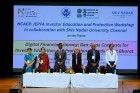
Shiv Nadar University Chennai, in collaboration with the National Council of Applied Economic Research (NCAER) and the Investor Education and Protection Fund Authority (IEPFA), Ministry of Corporat... Read more...
The Continuing Education Centre (CEC), IIT Roorkee, has announced Batch 5 of the Post Graduate Certificate Programme in Applied Data Science & AI, designed for working professionals seeking to ... Read more...
University of Colorado Denver (CU Denver) has received the letter of intent from India’s University Grants Commission (UGC) to establish a new campus in Hyderabad making it the first American... Read more...
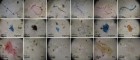
Plastic pollution is no longer limited to marine ecosystems. An ongoing doctoral study at MIT World Peace University (MIT-WPU), Pune, has detected microplastics in freshwater fish commonly consumed... Read more...
Aahwahan Foundation, with the support of Tredence CSR, is pleased to announce the launch of its ‘Meethi Muskan’ initiative, inaugurated at Aahwahan Old Age Home, H. NO, Police chouki, B130, Kri... Read more...
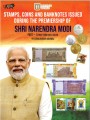
The Book "Stamps, Coins, and Banknotes Issued During the Premiership of Shri Narendra Modi" Part 2 is inspired by the remarkable transformation India has undergone under the visionary lea... Read more...
UPM Nordland Papier is expanding the use of John Crane's water-saving technology across its paper mill in Dörpen, Germany, after initial installations reduced seal water consumption to alm... Read more...
IndiaMART, India's leading online B2B marketplace, has been honoured with the Mahatma Award 2026 in recognition of its work across in the area of education. Recognized as an honor for organizat... Read more...